
Groundworks Hastings: Your quick- start guide to getting the foundations right. When you’re planning any construction project in Hastings, Kent, or East Sussex, the foundation literally sets the stage for everything that follows. Getting your groundworks right from the start can save you thousands of pounds and years of headaches down the line.
What Are Groundworks and Why Do They Matter?
Groundworks encompass all the preparation work that happens before you see any structure rising from the ground. This includes excavation, drainage, foundations, and the essential groundwork that creates a stable base for your project.
Think of groundworks as the invisible backbone of your build. Whether you’re planning new homes in Tenterden Kent or extending your existing property in Hastings, proper groundworks ensure your structure will stand the test of time.
The importance cannot be overstated. Poor groundworks can lead to:
- Structural subsidence and settlement
- Damp and water ingress problems
- Costly repairs that could have been prevented
- Planning and building control issues
The Foundation of Success: Understanding Your Site
Before any excavation begins, you need to understand what lies beneath your feet. East Sussex and Kent have diverse soil conditions, from clay in some areas to chalk downs in others. Each soil type presents different challenges and opportunities.
Soil analysis is your first crucial step. A proper soil investigation will reveal:
- Bearing capacity of your ground
- Drainage characteristics
- Any contamination issues
- Underground utilities or obstacles
Many homeowners skip this step to save money upfront, but it’s false economy. Professional builders in Hastings know that spending £500-£1000 on soil analysis can prevent £10,000+ problems later.
Common Groundworks Mistakes That Cost Money
Over the years, we’ve seen the same mistakes crop up repeatedly across Kent and Sussex. Here are the big ones to avoid:
Inadequate drainage planning ranks as the number one issue. Sussex weather means your groundworks must handle significant water. Poor drainage leads to:
- Waterlogged foundations
- Damp basements and crawl spaces
- Structural movement as soil expands and contracts
Rushing the excavation process is another costly error. Proper excavation requires precision. Going too deep, not deep enough, or failing to account for underground services can derail your entire project timeline.
Ignoring local building regulations specific to your area. Hastings and surrounding areas have particular requirements based on local geology and flood risk. What works in other parts of the country might not meet local standards.
Your Step-by-Step Groundworks Guide
Step 1: Planning and Permissions
Start with your local planning department and building control. They’ll provide specific requirements for your area and project type. This isn’t just bureaucracy – these requirements exist because local authorities understand the ground conditions and risks specific to your region.
For groundworks Hastings projects, you’ll typically need building regulations approval even if you don’t need full planning permission. Get this sorted before you lift a spade.
Step 2: Mark Out Your Site
Accuracy at this stage prevents expensive corrections later. Use the stake and string method for smaller projects, or invest in professional surveying for larger builds. Your measurements need to account for:
- Foundation walls and their thickness
- Working space around the excavation
- Access routes for machinery and materials
- Storage areas for excavated soil
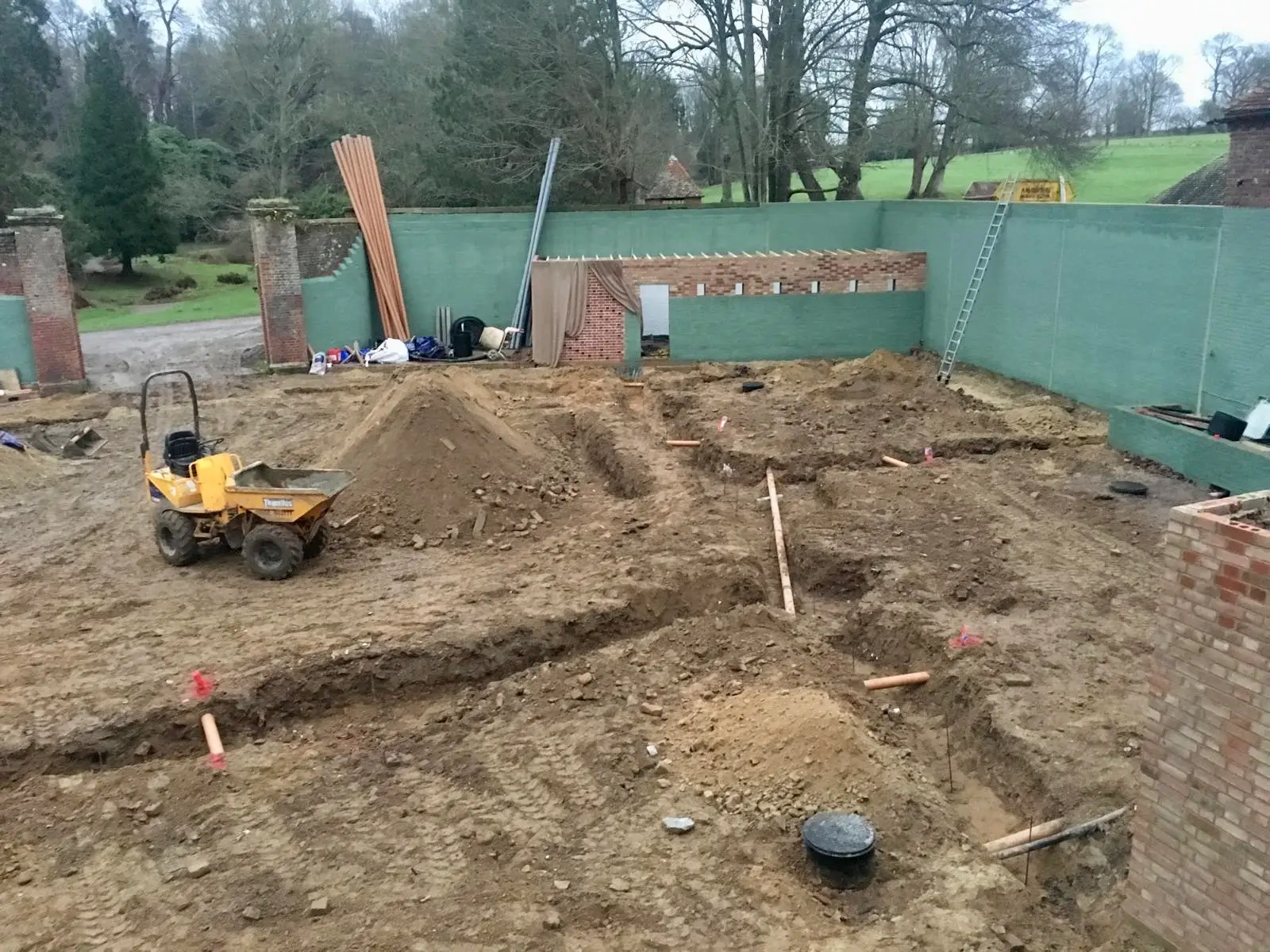
Step 3: Excavation and Site Preparation
Excavation depth depends on your foundation type and local frost line requirements. In Kent and Sussex, you’ll typically need to go at least 450mm below ground level, but this varies based on soil conditions and building type.
Important safety note: Always call utility companies to mark underground services before excavating. Cable strikes aren’t just expensive – they can be lethal.
Remove all topsoil and organic matter. This material is great for your garden but terrible for foundations. Store it separately if you plan to use it for landscaping later.
Step 4: Foundation Preparation
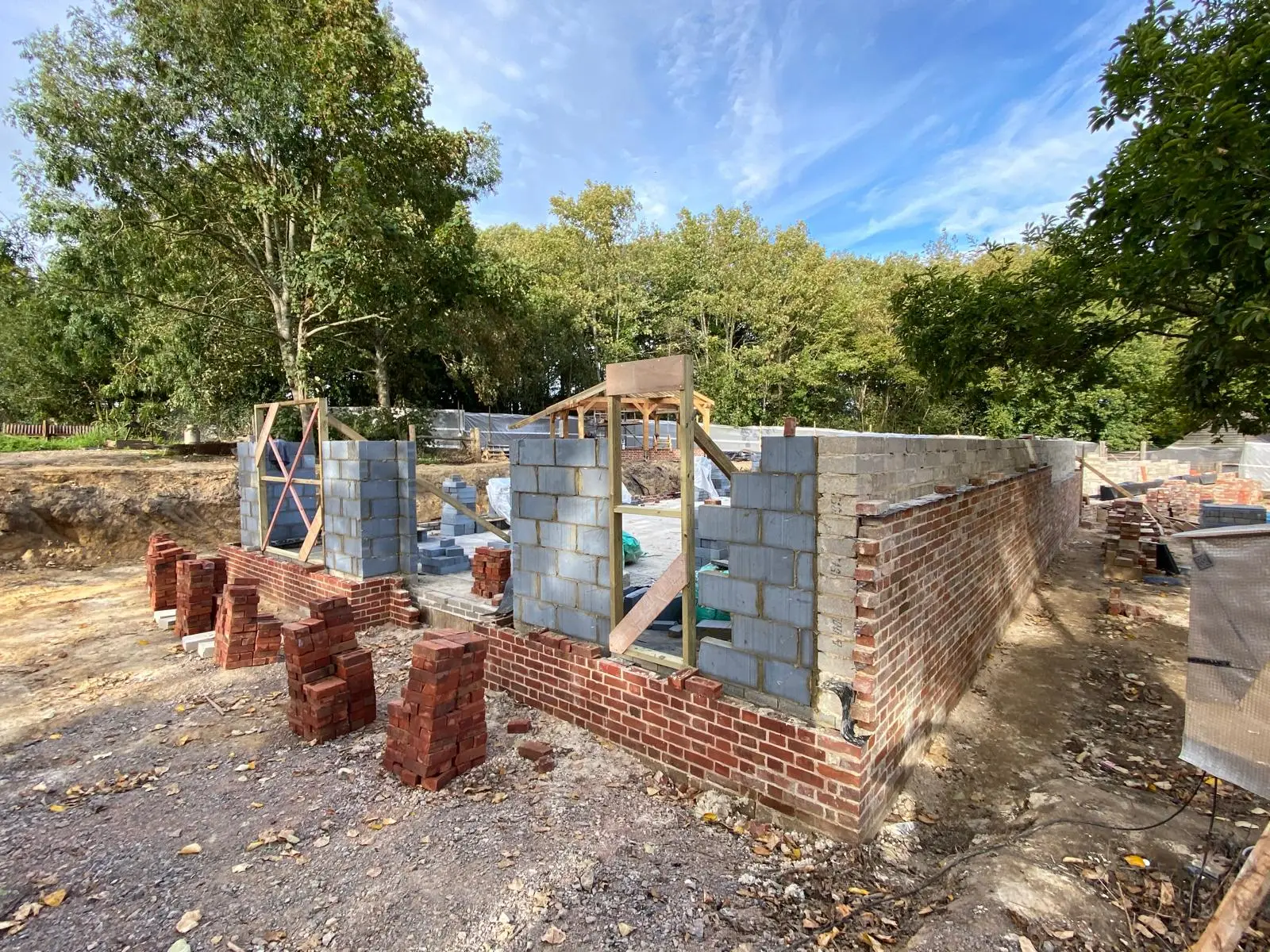
Once you’ve reached the correct depth with clean, level surfaces, it’s time for foundation work. For most residential projects in our area, you’ll be looking at either strip foundations or pad foundations.
Strip foundations work well for traditional block and beam construction, while pad foundations suit projects with specific load points. Your structural engineer will specify which type suits your project based on the soil analysis and building design.
Install any necessary reinforcement before pouring concrete. Steel reinforcement bars (rebar) provide tensile strength that concrete alone cannot offer. This is particularly important in areas with clay soils that may shift seasonally.
Step 5: Drainage and Services
Never treat drainage as an afterthought. Your groundworks phase is the ideal time to install:
- Foundation drainage systems
- Service ducting for utilities
- Future-proofing for potential extensions
Proper drainage around foundations prevents the water-related issues that plague many older properties in our region. A good drainage system pays for itself by preventing future damp problems.
When to Call in Professional Help
While some groundworks tasks can be DIY projects, certain situations demand professional expertise. Construction companies in Kent UK offer specialised groundworks services that can save you time and ensure compliance with building regulations.
Consider professional help when:
- Your soil analysis reveals challenging conditions
- You’re working near existing structures
- Your project involves significant drainage work
- Building control requirements are complex
Professional groundworks contractors bring several advantages:
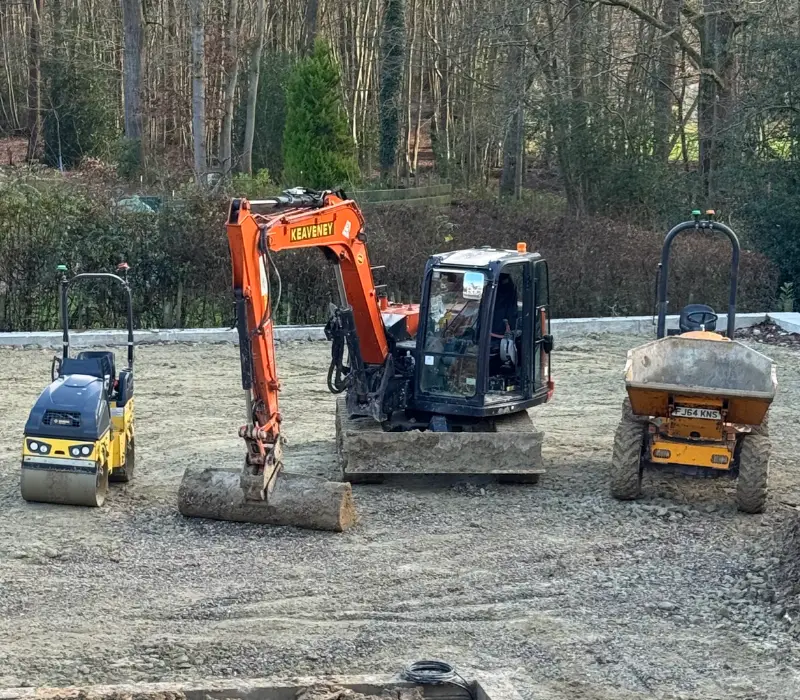
- Specialised equipment for efficient excavation
- Knowledge of local soil conditions and regulations
- Insurance and warranties on their work
- Established relationships with building control officers
Local Considerations for Hastings and East Sussex
Building in this region comes with specific challenges and advantages. The proximity to the coast means some areas deal with higher groundwater levels, while the varied geology across Kent and Sussex requires local knowledge.
Flood risk assessment may be required for some areas, particularly lower-lying parts of Hastings and the Rother valley. Environment Agency flood maps provide initial guidance, but professional assessment may be necessary.
Heritage considerations can affect groundworks, especially in historic areas of Hastings and surrounding villages. Archaeological watching briefs may be required, and this can affect your project timeline and budget.
Planning for Long-Term Success
Quality groundworks set your project up for decades of trouble-free performance. While it might seem expensive initially, proper groundworks represent excellent value when you consider the alternative costs of remedial work.
Future-proofing your groundworks pays dividends. Consider:
- Over-sizing service ducts for future requirements
- Installing drainage capacity beyond minimum requirements
- Using higher-grade materials in areas prone to settlement
The investment in quality groundworks typically represents 10-15% of your total build cost but influences 100% of your building’s long-term performance.
Getting Started with Confidence
Groundworks might seem daunting, but breaking the process into manageable steps makes it achievable. Start with thorough planning, understand your site conditions, and don’t hesitate to seek professional advice when needed.
Whether you’re planning a new build, extension, or renovation project in Hastings, Tenterden, or anywhere across East Sussex, getting your groundworks right sets the foundation for everything that follows. Take time to do it properly, and your future self will thank you.
Remember, every successful construction project starts with solid groundworks. Invest in this crucial phase, and you’ll build with confidence knowing your project sits on firm foundations.