
RSJs and Steel Beams: Why Professional Installation Is Essential. Planning to knock through a wall to create that open-plan kitchen you’ve been dreaming about? Or maybe you’re adding an extension and need proper structural support? Either way, you’re going to need an RSJ or steel beam: and here’s the thing: installing one is absolutely not a DIY job.
We see it all the time in Kent and East Sussex. Homeowners get excited about their renovation, watch a few YouTube videos, and think “how hard can it be?” The answer? Very hard. And potentially very dangerous.
Let’s talk about why professional installation isn’t just recommended: it’s completely non-negotiable.
What Exactly Is an RSJ?
RSJ stands for Rolled Steel Joist, though these days the term is often used to describe any steel beam used in construction. You’ll also hear them called universal beams, I-beams, or H-beams depending on their shape and purpose.
These hefty pieces of steel do one critical job: they support the weight of your property when you remove a load-bearing wall or need to span a large opening. Think of them as the backbone of your renovation: without proper support, everything above comes crashing down. Literally.
Why DIY Installation Just Isn’t Worth the Risk
The calculations involved in selecting and installing an RSJ are complex. It’s not simply a case of measuring the gap and ordering a beam that fits. You need to know:
- How much weight the beam needs to support
- The span it needs to cover
- What type of beam is appropriate for your specific situation
- How the load will be distributed
- Where the beam needs to sit and on what foundation
Get any of these wrong, and you’re not just facing a botched renovation: you’re risking the structural integrity of your entire property. Walls can crack, floors can sag, and in worst-case scenarios, parts of your building can collapse.
This isn’t us being dramatic. It’s just the reality of structural work.
The Role of the Structural Engineer
Before a single beam is ordered, you need a qualified structural engineer to assess your project. They’ll visit your property, take measurements, examine the existing structure, and run detailed calculations to determine:
- The exact size and type of beam required
- Where it needs to be positioned
- What support it needs (padstones, pillars, etc.)
- How to handle the load transfer
Their calculations aren’t guesswork: they’re based on British Standards and building regulations, taking into account everything from the material of your walls to the weight of your roof tiles. You’ll receive a set of structural drawings and specifications that must be followed to the letter during installation.
Trying to install an RSJ without these professional calculations is like building a bridge without knowing how much traffic it needs to carry. It might hold up for a while, but eventually, physics wins.
Precision Matters: Measurements and Seating
One of the biggest differences between professional and amateur installation is accuracy. We’re talking about millimetre-level precision here.
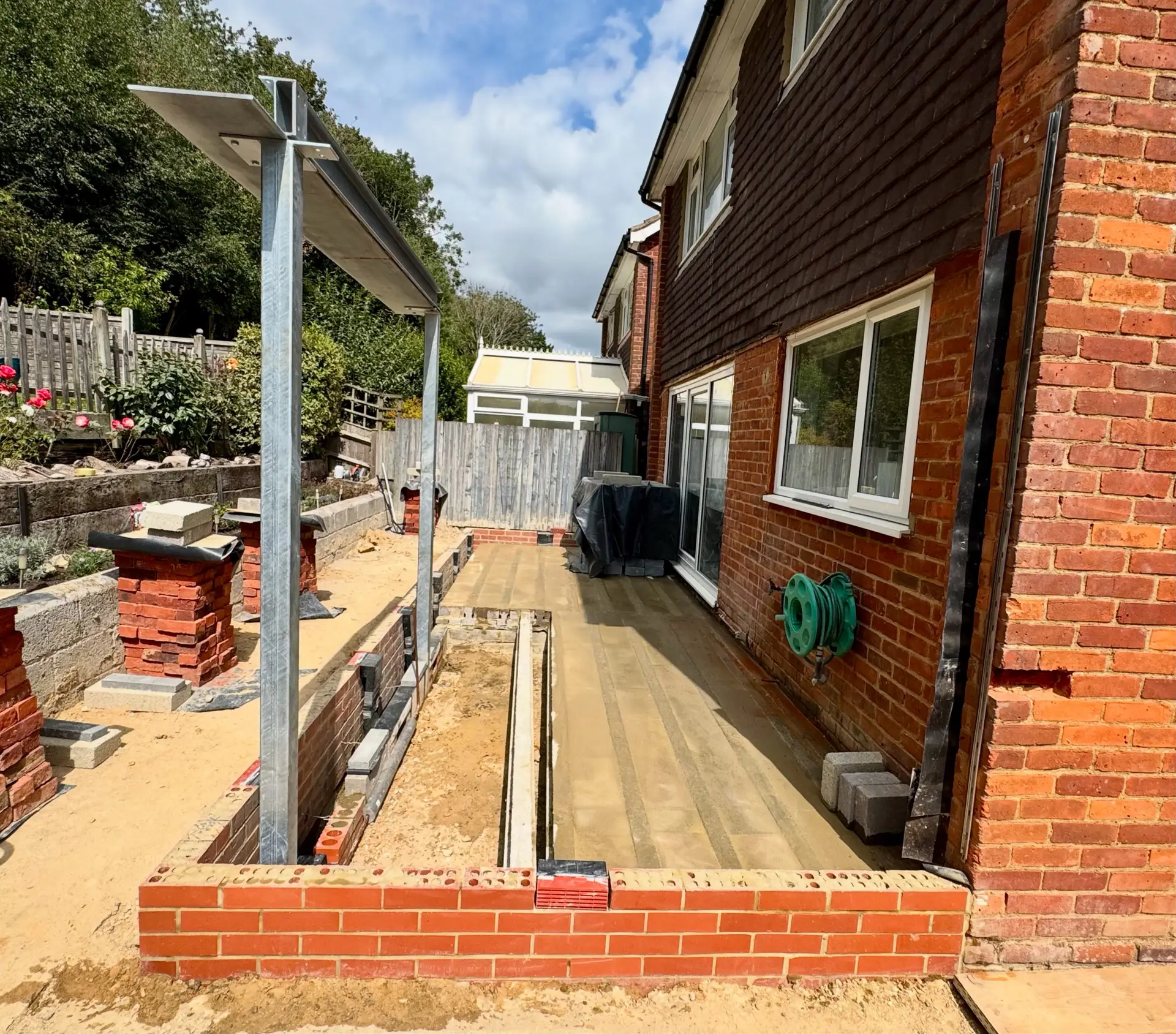
The beam needs to sit perfectly level and be positioned exactly where the structural engineer specified. It must rest on properly prepared bearing points: usually concrete padstones: that distribute the weight safely into the supporting walls or pillars.
Common mistakes we see:
- Padstones that are too small or missing entirely
- Beams that aren’t level (even a slight tilt causes uneven load distribution)
- Insufficient bearing length (the beam doesn’t sit far enough into the wall)
- Using the wrong type of mortar or bedding material
- Poor preparation of the supporting masonry
Each of these errors can compromise the beam’s performance and put your property at risk. Professional installers have the tools, experience, and knowledge to get it right first time.
Building Regulations: Not Optional
Here’s something many homeowners don’t realise: installing an RSJ requires Building Control approval. It’s not optional, and it’s not something you can skip and hope nobody notices.
You’ll need to submit your structural engineer’s plans and calculations to your local Building Control department before work begins. They’ll review the proposals, and once approved, they’ll want to inspect the work at key stages: particularly before the beam is enclosed.
If you proceed without approval, you could face:
- Having to expose and potentially replace the beam later
- Difficulties when selling your property
- Problems with insurance claims
- Legal action in severe cases
Professional installers like Fortify Construction handle all the Building Control liaison as part of the service, ensuring everything is done by the book from start to finish.
The Professional Installation Process
So what does proper installation actually involve? Here’s what happens when you work with experienced professionals:
1. Site Preparation
Before the wall comes down, temporary supports (Acrow props) are installed to hold up everything above. This prevents collapse while the load-bearing wall is removed and the beam is positioned.
2. Wall Removal
The section of wall is carefully removed, creating the opening for your new beam. This is done in stages to maintain structural stability throughout.
3. Bearing Preparation
The areas where the beam will sit are prepared, including installing padstones if required. These concrete blocks spread the beam’s load across a wider area of masonry.
4. Beam Positioning
The RSJ is lifted into place using proper equipment: these beams are extremely heavy and require mechanical lifting. It’s positioned according to the structural engineer’s specifications and checked for level in multiple directions.
5. Final Seating
Once positioned correctly, the beam is bedded in with the appropriate mortar mix, ensuring full contact with the bearing surfaces. Any remaining gaps in the walls are filled, and the structure is left to cure.
6. Inspection
Building Control inspects the work before it’s enclosed, verifying that installation matches the approved plans.
Getting the Right Beam Size
One mistake we sometimes encounter when rectifying DIY attempts is using an incorrectly sized beam. Bigger isn’t always better, and smaller definitely isn’t adequate if it doesn’t meet the calculated requirements.
Your structural engineer will specify the exact beam size based on:
- The span distance
- The load it needs to carry
- The type of steel
- The beam profile (I-beam, universal beam, etc.)
Standard beam sizes might seem interchangeable to the untrained eye, but even small differences in dimensions or steel grade can significantly affect load-bearing capacity. This is why following the engineer’s specifications exactly is absolutely critical.
Why Experience Matters in Kent and Sussex
Working across Kent and Sussex, we’ve tackled RSJ installations in everything from Victorian terraces in Hastings to modern builds in Tenterden. Local experience matters because:
- We understand regional building styles and construction methods
- We’re familiar with local Building Control requirements
- We know reliable local structural engineers
- We’ve encountered the common issues specific to properties in this area
Older properties particularly require careful handling. Those lovely period features often come with quirky structural arrangements that need experienced eyes to navigate safely.
When to Call in the Professionals
If your renovation involves any of these, you need professional RSJ installation:
- Removing or altering a load-bearing wall
- Creating a wider opening (like bi-fold doors)
- Adding an extension that requires steel support
- Addressing existing structural issues
- Converting a loft or creating additional floors
Even if you’re handy with DIY for other aspects of your renovation, structural steelwork should always be left to qualified professionals who carry proper insurance and can provide necessary certifications.
At Fortify Construction, we handle the entire process from initial consultation through to Building Control sign-off. We work closely with structural engineers, manage all the paperwork, and ensure your installation meets every safety standard and regulation.
Our team has installed countless RSJs across Kent and Sussex, and we understand that having structural work done can feel daunting. That’s why we take time to explain the process, keep you informed at every stage, and complete the work efficiently with minimal disruption to your home life.
The Bottom Line
Installing an RSJ or steel beam isn’t about saving a few quid or having a go yourself. It’s about ensuring your home remains safe, structurally sound, and legally compliant for years to come.
The risks of amateur installation: collapsed structures, failed inspections, insurance issues, and property devaluation: far outweigh any perceived savings. When it comes to structural work, professional expertise isn’t a luxury; it’s an absolute necessity.
If you’re planning a renovation that requires steel beam installation, Contact Us at Fortify Construction. We’ll guide you through the process, ensure everything is done properly, and give you complete peace of mind that your project is in safe hands.
After all, your home’s structural integrity is something you really don’t want to compromise on.