
Heating a listed building during the colder months can feel like a balancing act. You want comfortable rooms, lower heat loss and protection from frost, but you also need to avoid trapping moisture or damaging historic materials.
Many older buildings were built with solid masonry, lime mortar, lime plaster, timber floors and natural ventilation. These materials behave differently from modern cavity walls and sealed construction. If they are repaired or upgraded without considering how moisture moves through the building, damp, condensation and decay can become more likely.
The most suitable approach will depend on the age, construction and condition of your property. However, a combination of steady background heating, sensible ventilation and breathable materials can help protect a listed building through colder weather.
> Important: Work that affects the character or special interest of a listed building may require listed building consent. Always check with your local planning or conservation team before making changes to heating, insulation, ventilation, fireplaces, flues or historic finishes.
Why winter can create problems in listed buildings
Cold weather does not automatically cause damp, but it can make existing problems more noticeable. Several factors can combine during autumn and winter:
- External walls become colder.
- Moisture from cooking, washing and drying clothes remains indoors.
- Windows may be kept closed for longer.
- Heating may be switched on for short, intense periods.
- Rainwater may enter through defective gutters, roofs, chimneys or pointing.
- Impermeable repairs may prevent traditional walls from drying naturally.
When warm, moist indoor air meets a cold wall, window or ceiling surface, condensation can form. Over time, this may contribute to mould, staining and damage to finishes. It is also important to distinguish condensation from penetrating damp, rising damp and plumbing leaks, as each has a different cause and remedy.
A damp patch should not simply be covered with paint or treated with a chemical product before the source has been investigated.
Use steady background heating rather than sudden bursts
One of the most helpful ways to heat a listed building in winter is to maintain a reasonably stable temperature. This does not mean keeping every room warm all day. It means avoiding large and repeated changes between very cold and very hot conditions where possible.
Short bursts of high heat can warm the air quickly while leaving walls, floors and furniture cold. When the warm air meets those colder surfaces, condensation may form more easily. Gentle, regular heating gives the fabric of the building more time to respond.
Practical measures may include:
- Using a programmable heating system with modest background settings.
- Keeping unused areas above very low temperatures where appropriate.
- Using a frost thermostat to help protect pipes and services.
- Heating rooms regularly rather than allowing them to become extremely cold.
- Keeping internal doors open or closed according to the building’s layout and ventilation needs.
- Using separate controls so that occupied rooms are not overheated unnecessarily.
The correct temperature will depend on the property and its occupants. Historic England guidance highlights the value of background heat in protecting buildings and services, particularly from frost damage. A heating engineer can help assess the existing system and identify options that avoid unnecessary disturbance to historic fabric.
Ventilation is part of the heating strategy
It can seem counterproductive to ventilate a building when you are trying to retain heat. However, moisture needs a way out. Completely sealing an older property may reduce draughts but can also increase condensation if there is no planned replacement ventilation.
Useful steps can include:
- Using extractor fans when cooking or bathing.
- Opening windows briefly to release humid air, where safe and practical.
- Keeping air vents clear.
- Avoiding drying large amounts of laundry indoors without ventilation.
- Checking that bathrooms and kitchens have suitable extraction.
- Draught-proofing carefully around doors and windows without blocking essential ventilation routes.
Unused fireplaces and chimneys also need careful consideration. A permanently blocked flue can prevent heat loss but may remove an important ventilation route. In some situations, a suitable chimney balloon or ventilation device may reduce draughts while allowing limited airflow. This should be assessed by someone familiar with the chimney and its condition.
Ventilation changes may affect the appearance or historic fabric of a listed building. New grilles, ducts, fans and wall penetrations may require consent, so they should be planned before installation.
Why lime matters in older buildings
Lime mortar and lime plaster are common in traditional buildings because they are relatively flexible and vapour-permeable. In simple terms, they allow some moisture movement through the wall and can accommodate small movements without behaving like a rigid cement-based material.
This does not mean that lime makes a building waterproof or that every damp problem will be solved by repointing. It does mean that repairs need to be compatible with the existing construction.
Dense cement mortar, impermeable render and non-breathable paints can sometimes trap moisture within solid walls. In colder weather, this may contribute to frost damage, salt deposits, flaking finishes or deterioration of bricks and stone.

When considering repairs, homeowners may need to look at:
- The original mortar and plaster.
- The condition of brickwork or stonework.
- Whether external walls are exposed to driving rain.
- The condition of gutters, downpipes, roofs and chimney flashings.
- The type of paint or render currently used.
- Whether previous repairs have reduced the wall’s ability to dry.
A heritage and lime mortar construction specialist can help assess suitable materials and techniques for traditional masonry across Kent and East Sussex.
Check the building fabric before increasing insulation
Improving energy efficiency can make a listed home more comfortable, but insulation should not be treated as a standalone solution. The building’s condition, construction and moisture performance should be understood first.
Before adding internal wall insulation or sealing gaps, check for:
- Leaking gutters and downpipes.
- Damaged roof coverings.
- Defective chimney flashing or open joints.
- Blocked air bricks or sub-floor ventilation.
- Cracked or unsuitable pointing.
- Damp around suspended timber floors.
- Water penetration around windows and doors.
- Condensation in corners, cupboards and behind furniture.
The Rother District Council guidance on energy efficiency and historic buildings recommends a whole-building approach that considers construction, condition, historic significance and energy use together. It also explains that energy-efficiency work may require listed building consent, depending on its effect on the building.
Historic England provides further guidance on improving energy efficiency in historic buildings, including advice on roofs, walls, windows, doors and floors.
Heating options that may be suitable
There is no single heating system that suits every listed property. The best option depends on the existing fuel supply, insulation, room layout, available space and significance of the building.
Existing radiators
Improving controls or replacing an inefficient boiler may be possible with relatively limited visual change. However, new pipework, flues and radiators should be routed carefully to avoid historic plaster, panelling, joinery and flooring.
Underfloor heating
Underfloor heating can provide even, discreet warmth, but installation may involve lifting historic floors or excavating near old foundations. It may be suitable in a new extension or a previously altered area, but it needs detailed assessment before being considered for original rooms.
Heat pumps
Heat pumps can be used in some historic homes, although they may require changes to insulation, radiators, hot water systems and external equipment. An external unit can also affect the appearance of the property or its setting. Listed building consent and planning permission may be needed.
Electric heating
Electric radiators or panel systems can reduce the need for new pipework, but running costs and the visual effect of the equipment should be considered. They may be useful in individual rooms or areas where extending the main heating system would be disruptive.
Historic England’s guidance on heating systems for historic buildings sets out further considerations for owners and professionals.
What to do if you notice damp in colder weather
If damp becomes visible, start with observation rather than immediate repair. Record where it appears, when it is worst and whether it changes after rainfall, heating or ventilation.
Look for:
- Mould around cold corners or windows, which may indicate condensation.
- Tide marks or salts near the base of walls.
- Damp patches below gutters, roof valleys or chimney stacks.
- Peeling paint or plaster around external walls.
- Musty smells beneath suspended floors.
- Damp that worsens after heavy rain.
- Crumbling mortar or spalled bricks.
A survey should consider the whole building rather than relying on a single moisture-meter reading. The source may be external, internal or related to a previous repair.
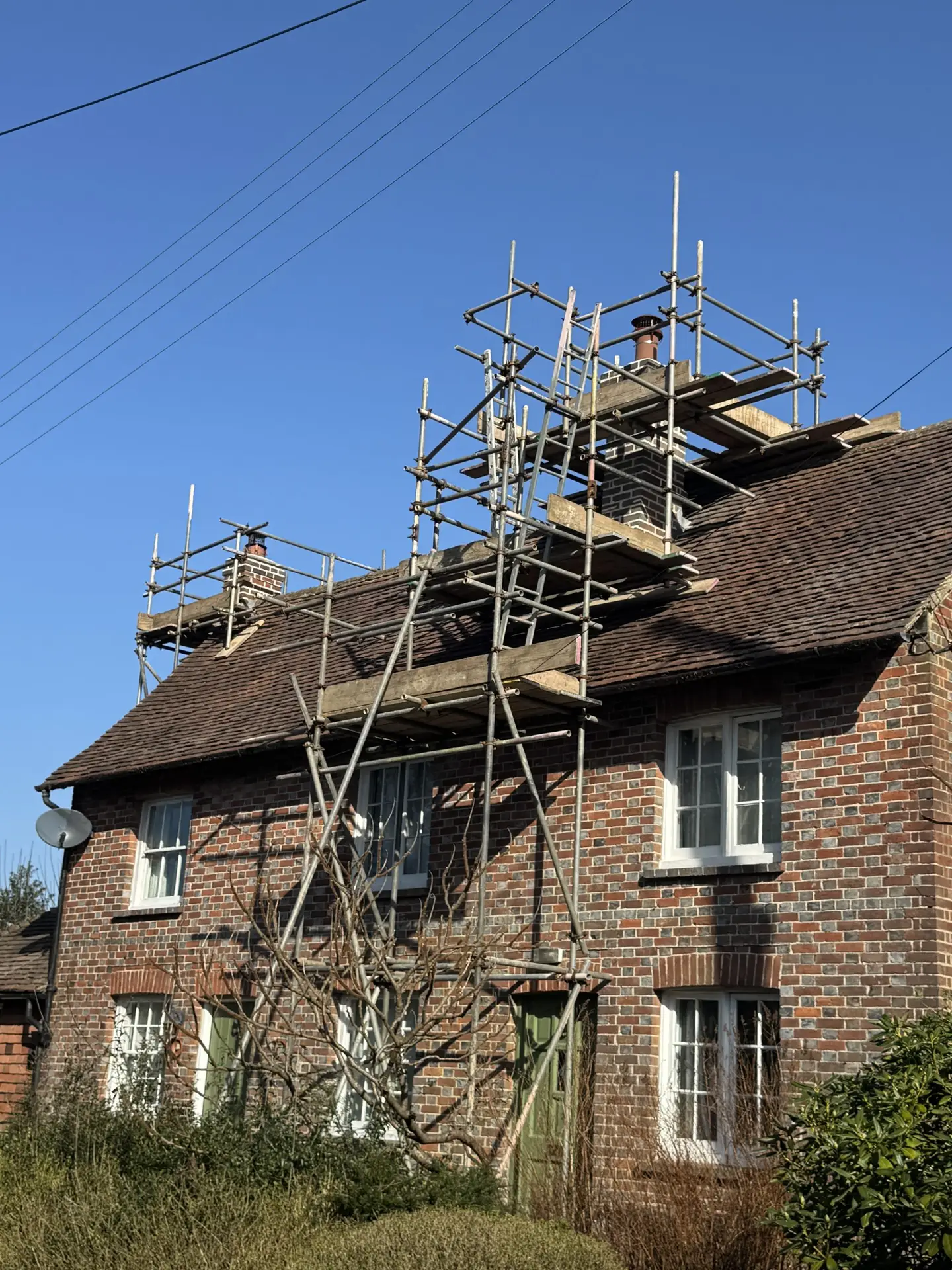
Fortify Construction provides listed building services including damp investigation and remedial works, lime mortar repointing, chimney restoration and sensitive repairs to historic masonry. The appropriate solution may involve repairing rainwater goods, replacing unsuitable pointing, improving ventilation or carrying out carefully specified structural work.
Plan changes around the building’s character
A listed building can often be made warmer and more practical, but improvements should be designed around its existing character. The most successful projects usually begin with an understanding of how the property was built and how it has changed over time.
Before work begins:
- Identify the building’s listing grade and special features.
- Arrange a condition survey if damp or structural movement is suspected.
- Check whether listed building consent or planning permission is needed.
- Discuss heating and ventilation changes with suitable specialists.
- Choose materials that are compatible with traditional construction.
- Keep records of repairs, materials and approvals for future maintenance.
With careful planning, background heating, controlled ventilation and breathable repairs can work together. The result is a more comfortable home that continues to protect its original fabric through the colder months.
Frequently asked questions about heating listed buildings in winter
What is the best way to heat a listed building?
There is rarely one single best system for every listed building. In most cases, the most effective approach is steady, controllable heating that works with the building rather than against it. Many period properties respond better to gentle background heat than short bursts of very high heat, because this helps keep surfaces more stable and can reduce condensation risk.
The right setup will depend on:
- The building’s age and construction
- Whether it has solid walls, timber floors or historic finishes
- Existing insulation levels and ventilation
- The condition of windows, roofs, gutters and pointing
- How often the property is occupied
For some homes, upgraded radiators and better controls may be enough. For others, a carefully planned central heating system, zoned heating or a heat pump may be considered. The best results usually come from treating heating, ventilation and maintenance as part of one overall strategy.
Should I insulate my listed building?
Possibly, but only after the building has been properly assessed. Insulation can improve comfort, but it is not automatically suitable in every part of a listed building and it should not be added without understanding how moisture moves through the structure.
Before insulating, it is sensible to check for:
- Damp caused by leaks, defective pointing or blocked drainage
- Non-breathable materials that may already be trapping moisture
- Cold spots linked to poor ventilation
- Historic features that could be harmed by alterations
In many listed buildings, inappropriate insulation can worsen condensation or trap moisture within solid walls or timber elements. A whole-building approach is usually the safest route, especially where internal wall insulation, floor upgrades or roof insulation are being considered. Consent may also be required depending on the impact on the building’s character.
Why does my period home feel damp even when the heating is on?
Heating the air does not always solve the reason a period home feels damp. Older properties often feel damp because moisture is still present in the building, surfaces remain cold, or ventilation is inadequate.
Common reasons include:
- Condensation forming on cold walls or windows
- Moisture from cooking, washing and drying clothes staying indoors
- Defective gutters, roofs, flashings or pointing allowing water in
- Cement-based repairs or non-breathable finishes trapping moisture
- Limited airflow in cupboards, corners or behind furniture
- Damp beneath suspended timber floors
If the air is warm but the walls are still cold, the room can still feel clammy. In many cases, the answer is not simply more heat, but a combination of suitable ventilation, repair of any water ingress, and compatible breathable materials where repairs are needed.
Can I install central heating in a listed building?
Yes, central heating can often be installed in a listed building, but it needs careful design. The main concern is not only whether the system will heat the home effectively, but how pipes, radiators, boilers, flues and controls can be fitted without unnecessary damage to historic fabric.
Particular care is needed around:
- Historic plaster and decorative finishes
- Timber floors and joinery
- Chimneys and flue routes
- Original stone or brick walls
- Visually sensitive rooms and elevations
Some installations may be straightforward in previously altered areas, while others may require listed building consent. The best approach is usually to plan the system around the building’s important features rather than forcing a modern layout into original spaces.
Is it better to heat an old house constantly or just when needed?
In many old houses, a low and steady level of background heat works better than letting the building become very cold and then trying to heat it quickly. Constant high heat is not usually necessary, but repeated swings between cold and very warm conditions can increase condensation risk and make rooms feel less comfortable.
A practical approach is often to:
- Maintain modest background warmth in colder weather
- Use timers and zones so occupied rooms get more heat when needed
- Avoid leaving the building unheated for long periods in freezing conditions
- Protect vulnerable areas such as pipe runs, corners and little-used rooms
This approach can help the building fabric stay more stable. The ideal settings will vary from one property to another, so it is usually worth balancing comfort, running costs and the condition of the building rather than relying on one rule for every home.
If your listed property is showing signs of damp or needs sympathetic repairs, contact Fortify Construction for professional advice across Kent and East Sussex. A considered assessment can help you decide what needs attention now and what can be planned for the future.