

The clocks go back at the end of October, and with them come the first proper autumn gales. The Met Office has already published its list of storm names for 2026/27, and the first name on it, Austen, is waiting to be used. For homeowners across Kent and East Sussex, that makes now the best time to take a close look at the part of the house that faces the worst of the weather: the chimney.
Chimney stacks stand above the roofline with nothing to shelter them. Years of rain, frost and wind slowly work on the mortar, the flaunching and the pots. A small defect in September can become a loose pot, a leak into a bedroom ceiling or, in the worst case, falling masonry by February. The good news is that most problems give clear warning signs, and autumn gives you a window to act before scaffolding becomes harder to arrange and the weather starts causing delays.
Why autumn is the right time to check your chimney
Most chimney damage is caused or made worse between October and March. Driving rain soaks into weak joints, the water freezes, and the ice expands and pushes mortar and brick faces apart. Strong winds then find anything already loose. Getting repairs done in early autumn means:
- Mortar and lime work can cure properly before the frosts arrive (see our heritage and lime mortar construction services).
- Scaffolding is easier to arrange before the winter rush of storm-damage call-outs.
- You can safely light the fire once your sweep has checked the flue.
Your autumn chimney checklist
You do not need to go up on the roof to carry out most of these checks. A pair of binoculars from the garden or the street is usually enough. Please leave any roof work to professionals with the right access equipment.
1. Look at the pots and cowls
Are the chimney pots upright? Any tilt, cracking or missing cowls should be dealt with quickly, because a pot that is already loose can be blown off in high winds.
2. Check the flaunching
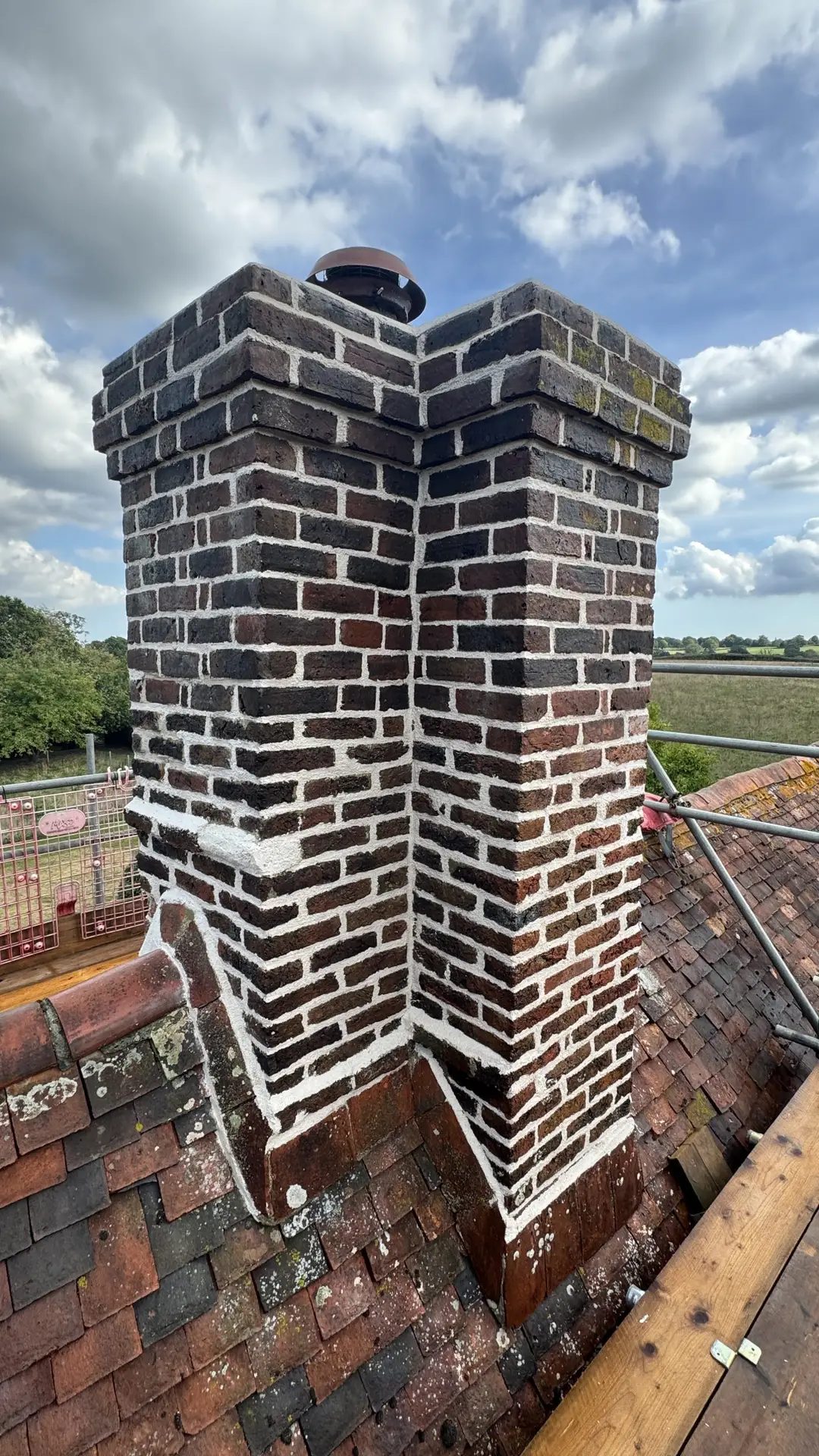
Flaunching is the sloped mortar bed at the top of the stack that holds the pots in place and sheds rainwater. Once it cracks, water runs straight into the stack. Cracks, missing chunks or plants growing at the top of the chimney are all signs it needs renewing.
3. Inspect the mortar joints and brickwork
Look for gaps between bricks, crumbling mortar or bricks with flaking faces (known as spalling). Stacks often weather far more on the side facing the prevailing south-westerly wind. If the joints are recessed or empty, the stack is ready for professional repointing.
4. Is the stack leaning?
A lean can be caused by sulphate attack from years of flue gases, failed mortar or structural movement. A leaning stack should always be looked at by a specialist, as it may need to be taken down and rebuilt.
5. Check the flashing
Flashing is the lead that seals the joint where the chimney meets the roof. Lifted, split or missing lead is one of the most common causes of leaks in autumn.
6. Look indoors too
Damp patches on the chimney breast, stained ceilings next to the stack, or a musty smell in an upstairs room can all point to water getting in higher up. Our article on why damp gets worse in winter explains how to tell the different causes apart.
Book a sweep before you light the fire
If you use a wood burner or open fire, have the flue swept before the first fire of the season. HETAS recommends sweeping at least once a year by a registered sweep, and more often for some fuels and appliances. A sweep can also spot early signs of damage inside the flue that you cannot see from outside. Make sure you have a working carbon monoxide alarm in any room with a fuel-burning appliance.
Chimneys on older and listed homes
Many homes around Tenterden, Rye, Battle and the Weald have chimneys built with soft bricks and lime mortar. Repairing these with hard cement mortar can trap moisture and damage the bricks over time. On a listed property, changes to a chimney may also need listed building consent. Our listed building team uses matching materials and traditional methods so repairs last and look right.
What to do if a storm is forecast
- Keep an eye on the Met Office UK Storm Centre for named storms and warnings.
- Move cars, bins and garden furniture away from the house if you already know the chimney has problems.
- Never go onto the roof during or straight after high winds.
- If masonry falls, keep people away from the area and call a professional to make it safe.
Frequently asked questions
How often should a chimney be inspected?
A visual check from the ground every autumn is sensible, with a professional inspection every few years, or straight away if you notice any of the signs above.
Can a chimney be repaired in winter?
Emergency repairs can be carried out all year round. Planned repointing and rebuilding, especially in lime, is best done before the frosts set in, which is why autumn is the ideal time to book.
Is chimney storm damage covered by insurance?
Many buildings policies cover sudden storm damage but not damage caused by wear and tear. Keeping your chimney in good repair can help avoid a claim being turned down. Always check your own policy wording.
Get your chimney ready before the storms arrive
Fortify Construction carries out chimney inspections, repairs and full rebuilds across Kent and East Sussex from our Hastings and Tenterden offices. If you have spotted any of the warning signs above, contact Fortify Construction today to book your autumn chimney check.