Ragstone wall repair is something many homeowners in Kent and East Sussex will face at some point. Quarries around Maidstone have produced Kentish ragstone for centuries, and you will find it in churches, farmhouses, garden walls and boundary walls right across the county and into the Weald. It is tough, attractive stone, but it does not behave like modern brickwork. Use the wrong mortar or the wrong method and a repair can do more harm than good.
Here is what makes ragstone different, the warning signs to look out for, and how to repair it properly, especially now that winter is on the way.
What makes ragstone walls different
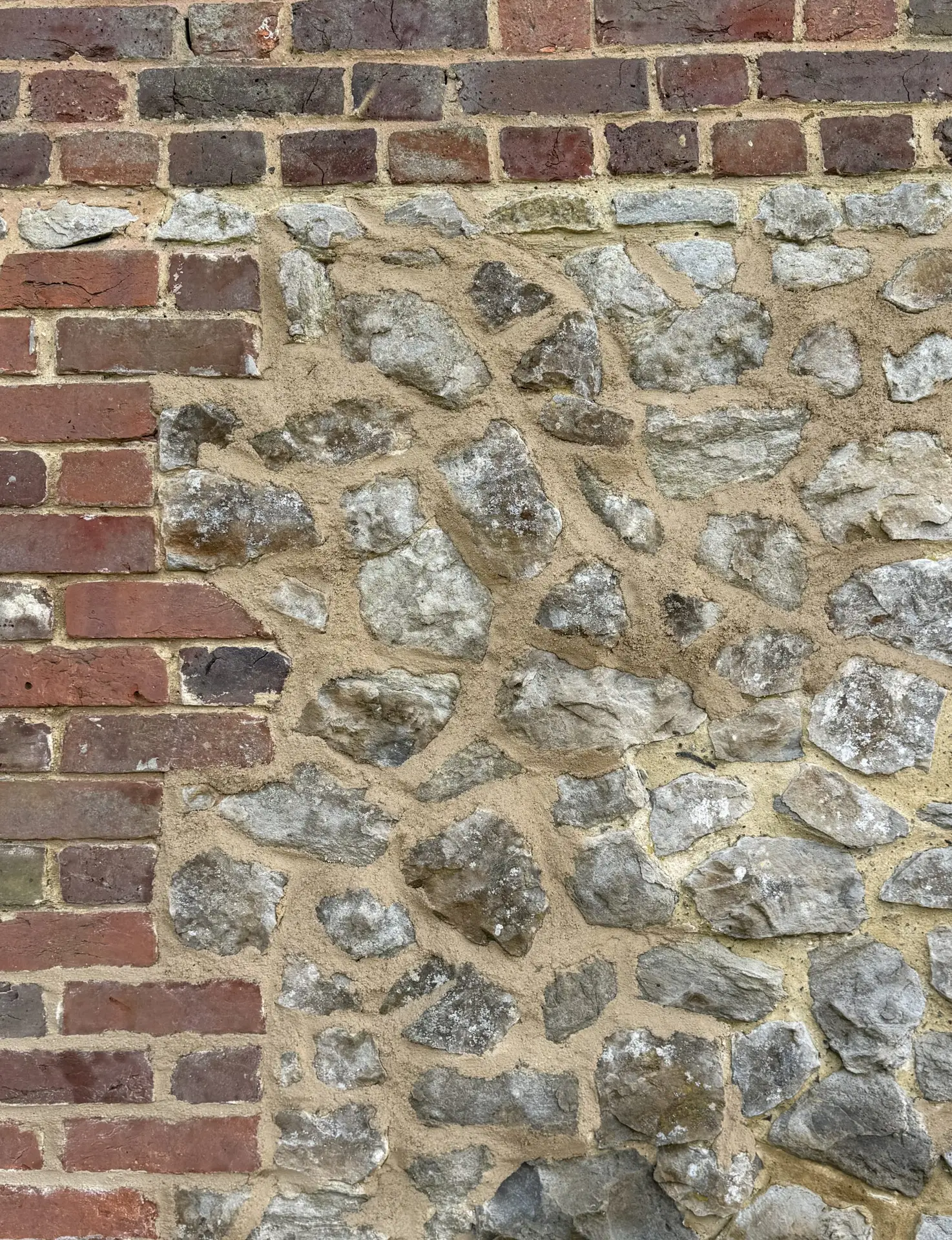
Most ragstone walls use rough, uneven stones with thick beds of lime mortar between them. Unlike a modern cavity wall, a ragstone wall needs to breathe. Moisture gets in through the stone and the joints and then dries out again through the mortar. The lime mortar is softer than the stone on purpose, so it takes the wear and a builder can renew it every few decades, while the stone itself lasts for centuries.
Problems start when something upsets that balance. Hard cement mortar, cement render or waterproof coatings trap moisture inside the wall. When that water freezes, it pushes the face off the stone, and the damage shows up as crumbling, flaking or loose stones. Our heritage and lime mortar construction team sees this on older walls across the area every year.
Signs your ragstone wall needs attention
- Mortar that is missing, sandy or crumbles when you rub it with a finger
- Loose stones, or stones that rock when pushed
- Bulging or leaning sections, especially on garden and retaining walls
- Hard grey cement pointing with crumbling stone around it
- Damp patches, green staining or plants growing out of the joints
- Cracks running through the wall rather than just along the joints
A few open joints are normal maintenance. Bulging, leaning or large cracks are more serious, as they can mean the wall is moving or the core has started to break down. If in doubt, ask a builder to check it before the frost sets in.
Why lime mortar matters for ragstone
The single most important part of any ragstone repair is the mortar. Lime mortar lets the wall dry out and stays slightly flexible, so the wall can move a little without cracking the stone. It also acts as a sacrifice: the mortar weathers instead of the stone. Historic England’s guide to repointing brick and stone walls is clear that new mortar should be no stronger than the original and should match it in colour and texture.
We mix our lime mortars to suit each wall, matching the colour and grain of the original as closely as we can. That way the repair blends in and protects the stone, rather than standing out as a patch. You can read more about why timing matters in our article on lime mortar repointing before winter.
Our approach to ragstone wall repair
1. Survey and assessment
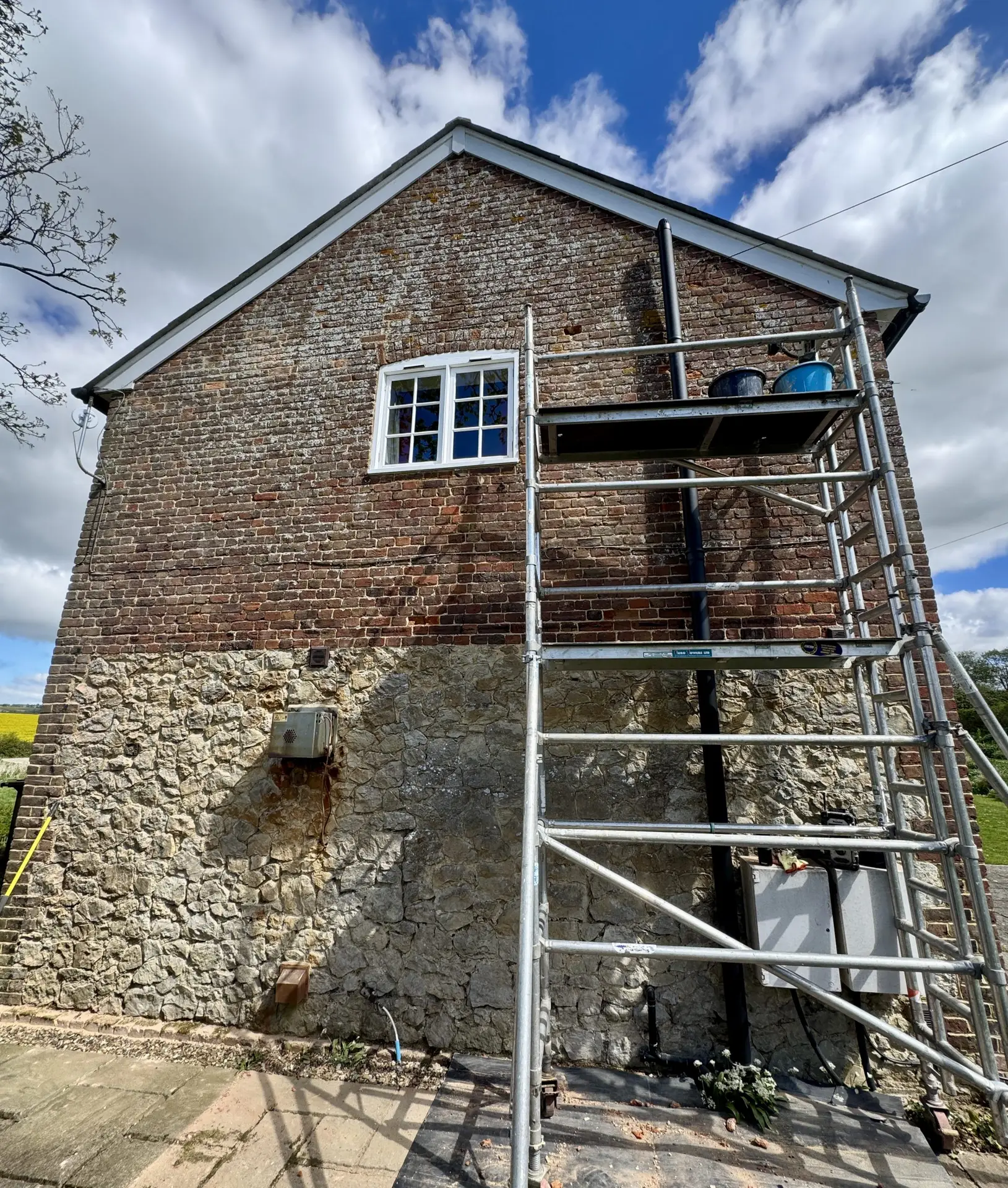
We start by looking at the whole wall, not just the damaged area. We check for movement, drainage problems, tree roots and any earlier cement repairs that need to come out.
2. Careful raking out
We remove failed and cement mortar by hand, taking care not to damage the edges of the stones. Rushing this stage with power tools is one of the most common ways people ruin ragstone.
3. Resetting and replacing stone
We reset loose stones in lime mortar. Where stones are beyond saving, we source matching ragstone or reuse sound stone from the wall, so the repair looks right from day one.
4. Repointing and protection
We pack and finish the joints to suit the style of the wall. We then protect fresh lime work from rain, sun and frost while it cures, which is especially important in late autumn and winter.
Listed buildings and conservation areas
Many ragstone walls sit within conservation areas or form part of listed properties, particularly in towns such as Tenterden, Rye and Battle. Like-for-like repairs often do not need consent, but rebuilding, changing materials or altering the look of a wall may. Our homeowner’s guide to listed building consent explains when you need it, and our listed building services cover the full process.
Frequently asked questions
Can I repoint a ragstone wall with cement?
It is not recommended. Cement is harder and less breathable than ragstone, so it traps moisture and causes the stone to crumble around the joints. Lime mortar is the right choice for almost all traditional stone walls.
How long does a ragstone wall repair last?
Good lime pointing on a ragstone wall can last 30 to 50 years or more, depending on how exposed the wall is and how well it drains.
Can ragstone repairs be done in winter?
Some work can, but you must protect lime mortar from frost while it cures. We can often carry out smaller repairs in mild spells with proper covers. For larger repointing, spring is usually the best time.
Need ragstone wall repair?
Fortify Construction repairs ragstone, flint and brick walls across Kent and East Sussex using traditional methods and materials. Take a look at our gallery for recent work, see our brickwork and repointing services, or contact Fortify Construction to arrange a survey before the worst of the winter weather arrives.