

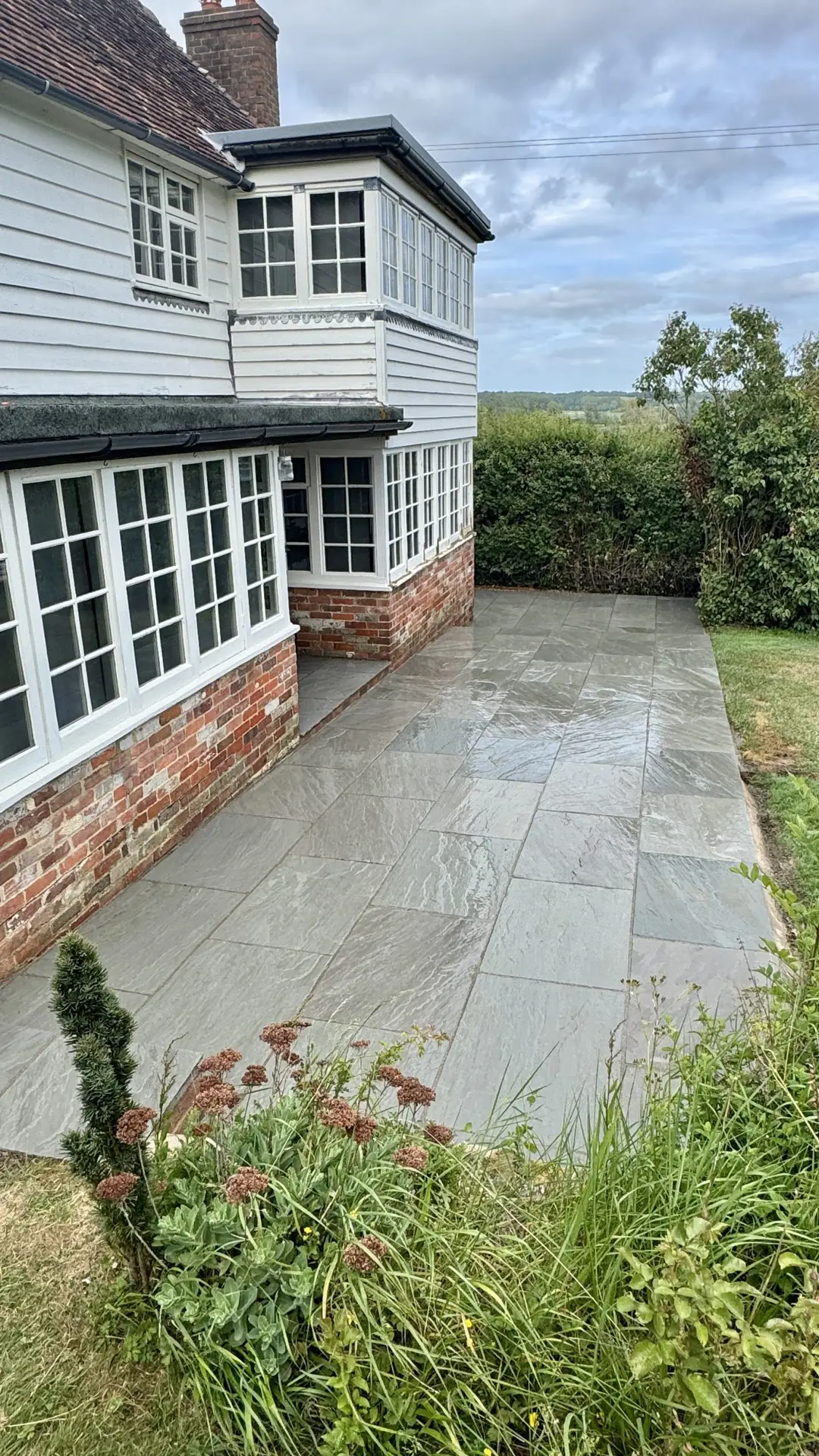
Puddles, patios and driveways: get your outdoor spaces ready for a wet winter. After a dry summer, the first heavy autumn rain can show you exactly where your outdoor spaces are struggling. Water pooling on the patio, a driveway that turns into a stream, or a path that goes green and slippery all point to drainage problems. Left alone over winter, standing water and frost can loosen paving, crack joints and even push damp towards the house.
Here is how to get patios, paths and driveways ready for the wet months, plus a planning rule every homeowner should know before paving a front garden.
Signs your outdoor drainage is not coping
- Puddles that stay for hours after the rain stops.
- Water flowing towards the house, garage or airbricks rather than away from them.
- Sunken or rocking slabs and block paving.
- Jointing that has washed out, with weeds growing through.
- Green algae and moss making surfaces slippery.
- Soggy lawn edges beside paving, showing where water is running off.
Your autumn outdoor checklist
1. Clear leaves and debris
Fallen leaves block channel drains, gullies and gratings faster than anything else. Clear them regularly through October and November, and lift gully grates to remove silt that has built up over the summer.
2. Check the falls
Patios and driveways should be laid with a slight slope (known as a fall) so water runs away from buildings and into a drain, soakaway or planted area. If water sits against the house wall, the fall may be wrong or the ground may have settled. Standing water next to walls is a common cause of damp in older homes, as we covered in our article on damp in listed buildings.
3. Refill open joints
Gaps between slabs let water get under the paving. When that water freezes, it can lift and crack slabs. Refilling joints before winter is a small job that prevents much bigger ones.
4. Keep airbricks clear
Make sure soil, paving or planting has not built up against airbricks and damp-proof courses. Outside ground levels should normally sit well below the floor level inside.
5. Treat slippery surfaces
A gentle clean and a suitable patio treatment will reduce algae. Take care with pressure washers on older brick and natural stone, as they can strip joints and damage soft surfaces.
Paving a front garden? Know the 5 square metre rule
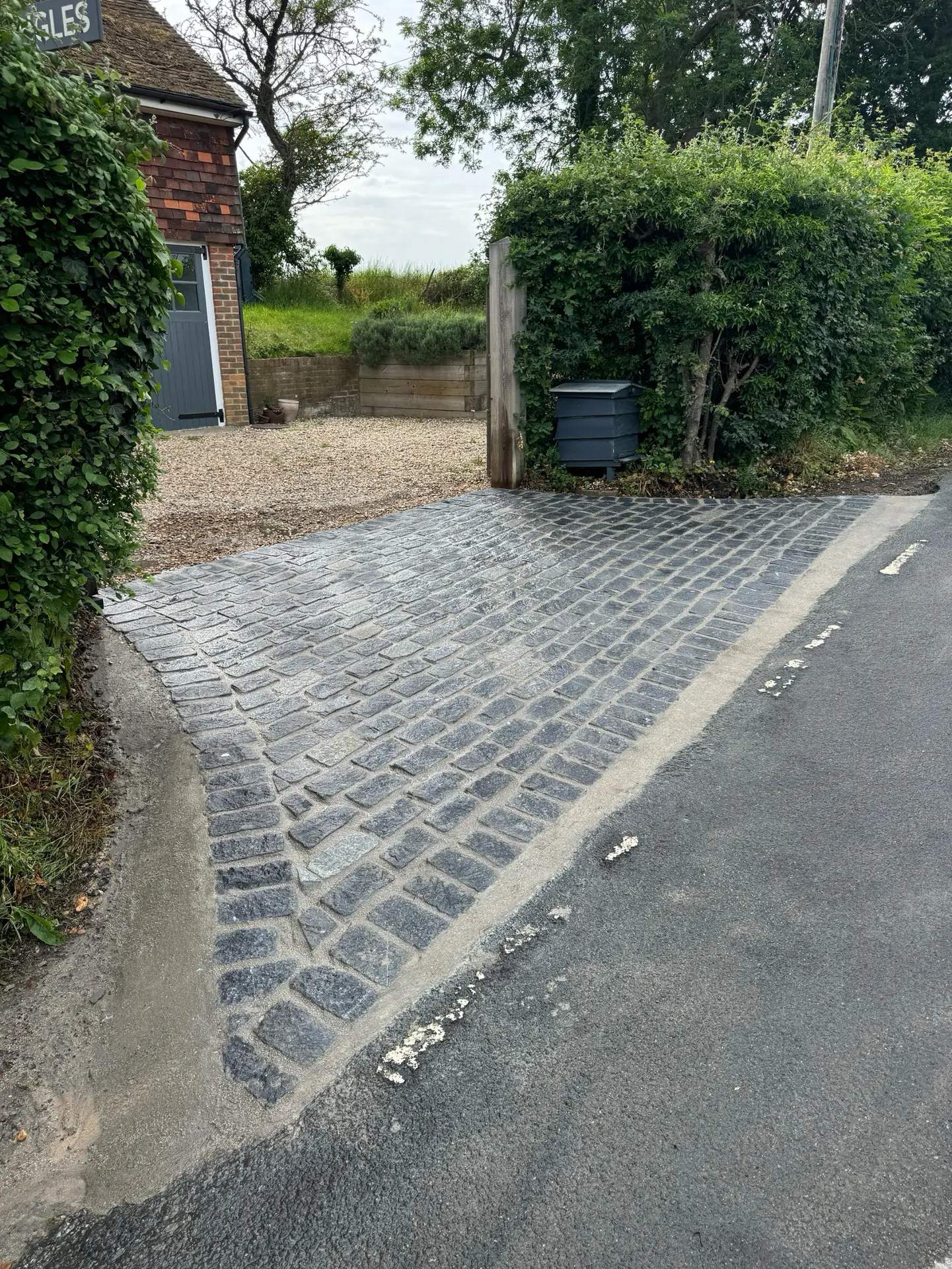
If you are thinking about a new driveway, there is an important rule in England. Since October 2008, covering more than five square metres of a front garden with a hard surface only counts as permitted development if the surface is permeable, or if rainwater is directed to a lawn, border or soakaway within your property. If you use traditional impermeable materials like concrete or tarmac over that area and let water run onto the road, you will need planning permission. The government’s guidance on permeable surfacing of front gardens explains the options.
Permeable block paving, gravel and setts laid on the right sub-base can all help rainwater soak away naturally. They also reduce the risk of local surface water flooding.
When it is time for a proper fix
Clearing drains and refilling joints will solve many small problems. But if your patio or driveway floods every time it rains, slabs keep sinking, or water is reaching the house, the issue is usually underneath: a poor sub-base, the wrong falls or no drainage at all. That calls for lifting and relaying the surface with proper groundworks, including channel drains or soakaways where needed.
Autumn and winter are also a good time to plan a new outdoor space ready for spring. Take a look at our porcelain patio design ideas and our guide to garden re-developments in Kent and Sussex.
Frequently asked questions
Why does water pool on my patio?
Usually because the patio was laid without enough fall, the base has settled, or the drainage it runs into is blocked. A contractor can check the levels and suggest the right fix.
Do I need planning permission for a new driveway?
Not if it is permeable or drains to a permeable area within your property. For more than five square metres of impermeable surface in a front garden that drains onto the road, you will need permission. Different rules can apply to listed buildings and some conservation areas.
Can paving be laid in winter?
Yes, in dry and mild spells. Mortar and bedding should not be laid in frost, so good contractors plan around the forecast.
Sort out soggy patios and driveways for good
Our landscaping and groundworks teams design and build patios, paths and driveways that drain properly across Kent and East Sussex. Contact Fortify Construction for a free quote.