Here is why timing matters, what happens if lime work is rushed into cold weather, and how to get your walls ready before the frosts arrive.
How lime mortar cures
Modern cement mortar sets quickly through a chemical reaction with water. Lime mortar is different. Most of its strength comes from slowly absorbing carbon dioxide from the air, a process called carbonation. This can take weeks or months, and it only works well when:
- temperatures are mild, as most specialists avoid lime work when it is expected to drop below around 5°C;
- the mortar is kept slightly damp, not soaked and not allowed to dry out too fast;
- it is protected from frost, heavy rain and strong drying winds.
That slow cure is exactly what makes lime right for old buildings. It stays soft and breathable, which lets moisture escape from solid walls. But it also means fresh lime work is vulnerable for some time after it is laid.
What frost does to fresh lime mortar
Newly laid lime mortar still holds a lot of water. If that water freezes, it expands and breaks up the mortar before it has had time to harden. The damage is not always obvious at first, but in spring you may find joints that are crumbling, powdery or falling out, and the job has to be done again.
That is why a careful contractor will plan lime work around the forecast, use hessian and protective sheeting, and sometimes stop work altogether during a cold spell. It is also why autumn bookings fill up quickly.
Signs your walls need repointing
Walk around the outside of your home and look for:
- mortar that is recessed well back from the face of the brick or stone;
- joints that crumble or turn to sand when lightly scratched;
- bricks with flaking or crumbling faces, often a sign of hard cement pointing trapping moisture;
- damp patches on inside walls after heavy rain;
- plants or moss growing out of the joints.
Our earlier article on how professional repointing saves your walls (and your wallet) goes into more detail on what to look for.
Why cement is the wrong fix for older walls
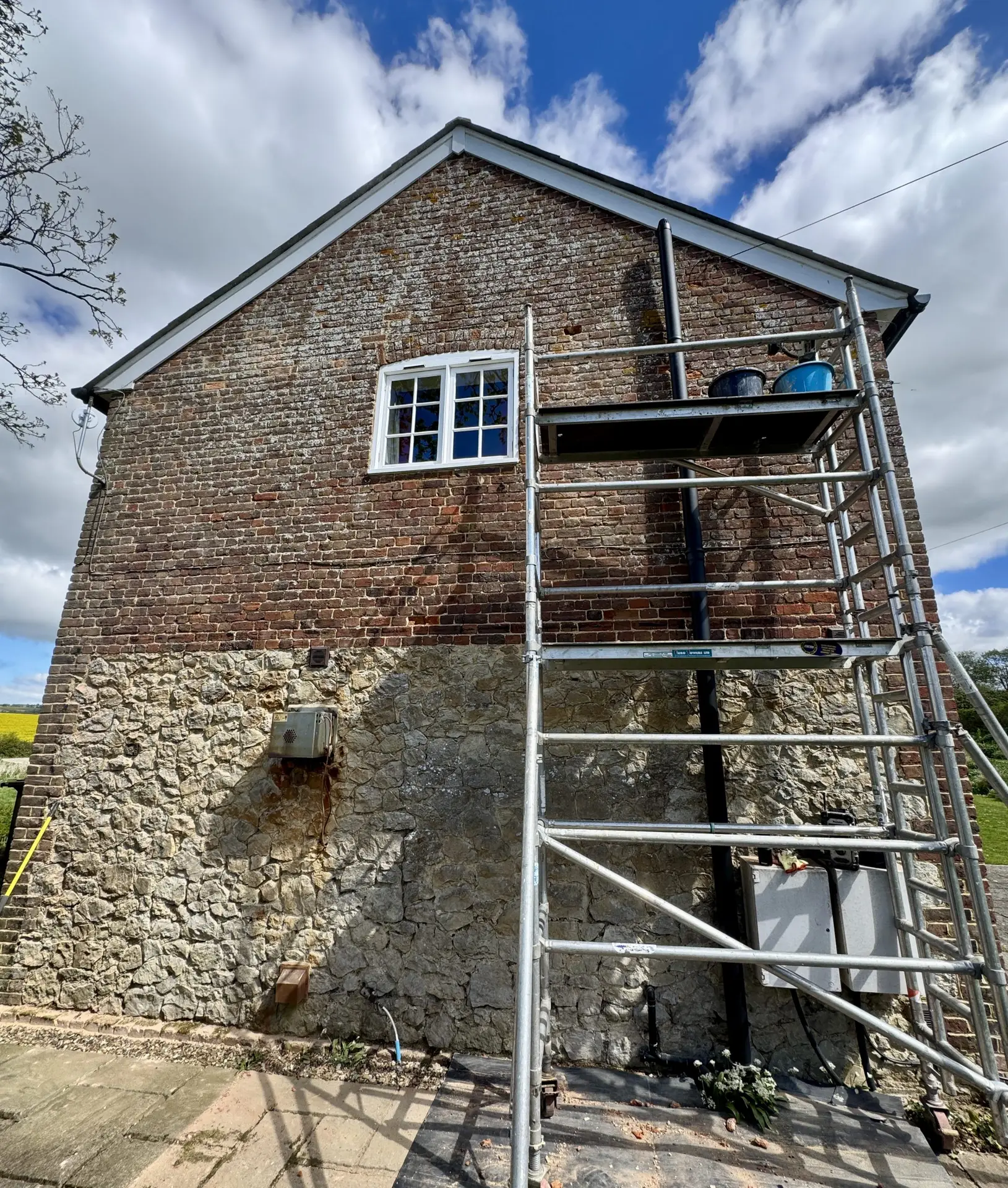
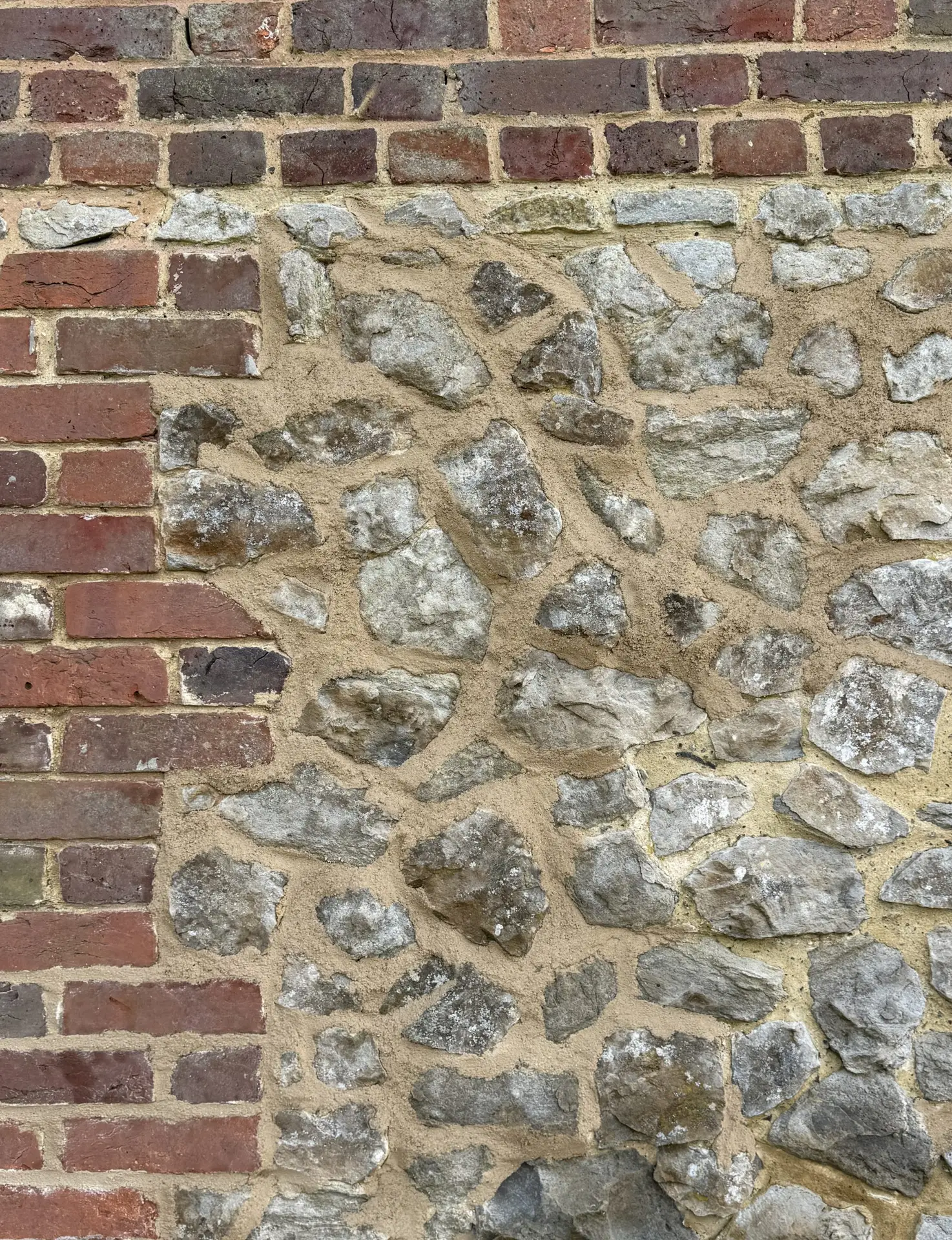
Many period homes across the region, from Kentish ragstone cottages to Victorian terraces in Hastings and St Leonards, were built with soft bricks and lime mortar. When these are repointed with hard cement mortar, moisture can no longer escape through the joints. It moves through the bricks instead, and frost then damages the brick faces. Historic England’s guidance on repointing brick and stone walls explains why the mortar should always be weaker and more breathable than the masonry around it.
If your home is listed, repointing in a different mortar or changing the joint finish may need consent. See our homeowner’s guide to listed building consent for more information.
What if you miss the autumn window?
If your pointing is failing badly, a contractor can make temporary repairs to keep water out over winter. Full repointing can then be booked for spring, when temperatures are reliably above 5°C. In the meantime:
- keep gutters and downpipes clear so walls are not soaked by overflowing water;
- avoid sealing walls with waterproof coatings, which can trap moisture;
- keep rooms gently heated and ventilated (our guide to heating a listed building without damaging it has more tips).
Frequently asked questions
How long does lime mortar take to cure?
Lime mortar is usually firm within a few days but continues to harden for weeks and months. It needs protection from frost and fast drying for at least the first few weeks.
Can lime work be done in winter at all?
Only in mild spells and with good protection. Most specialists avoid it from late autumn to early spring because the risk of frost damage is too high.
Is lime mortar more expensive than cement?
The material can cost a little more and the work takes longer, but it protects the bricks and stone, which are far more expensive to replace. Done properly, lime pointing can last for decades.
Book your repointing before the frosts
Our heritage and lime mortar specialists repoint homes, boundary walls and chimneys across Kent and East Sussex, and our listed building services team can advise on consent and matching materials. Contact Fortify Construction to arrange a visit while there is still time to book this season.